Golf grip pressure: how tight should you hold the club
Most golfers grip the club far tighter than they need to, then wonder why the swing feels stiff and slow. Grip pressure is not fixed for the whole swing. This guide gives you a simple scale, clear signs of too much and too little, and drills to calibrate it.
For most full shots, hold the club at about 4 to 5 out of 10 at address: firm enough that the club cannot twist in your hands, light enough that your wrists can still hinge freely. Pressure rises a little at the top and through impact as a reaction to speed, but it should never start tight. If your forearms feel tense before you move, you are already too tight.
The 1 to 10 scale, in plain terms
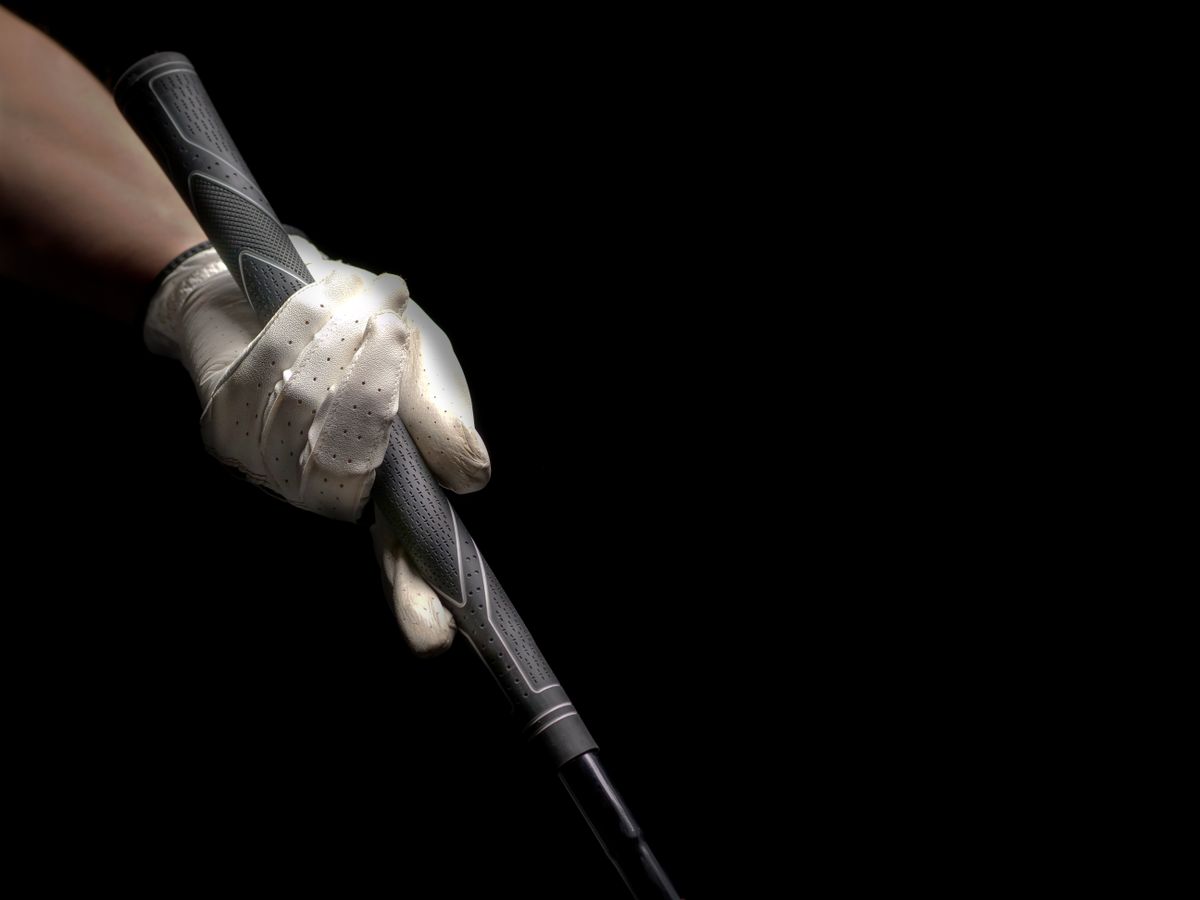
Think of 1 as barely holding the club so it would slide out with a small tug, and 10 as squeezing as hard as you can. You will never play at either end. Address pressure for irons and hybrids sits around 4 to 5 for most golfers. Short chips and putts sit lower, around 3. The point of the scale is not precision. It gives you a language to notice change: if you start at 4 and feel 8 at the top, tension is creeping in and the wrists will stop working.
Why too tight costs you hinge and speed
Tight hands lock the wrists. Locked wrists cannot hinge, and without hinge you lose the angle that stores speed for the downswing. Tight forearms also slow the turn because the whole arm chain stiffens. The ball flight tells the story: low, weak shots that start right for a right handed golfer, or pulls when you throw the club at the ball to compensate. Before you change anything else, check the basics in The golf grip: neutral, strong and weak explained so hand position is not adding to the problem.
Why too loose costs you the face
Too loose is less common, but it is real. At 2 out of 10 the club twists at impact, especially from rough or on off centre strikes. You feel the handle turn in the top hand and the face arrives open or closed by chance. The check is simple: at address, have a partner try to pull the club from your hands with a steady tug. It should resist without you needing to squeeze harder. If it slides, add a small amount of pressure, mainly in the last three fingers of the lead hand.
Where pressure actually lives in the hands
Pressure should feel centred in the fingers, not crushed into the palms. The lead hand holds mainly through its last three fingers. The trail hand sits lighter, more in the fingers than most golfers expect, so it can support without taking over. A useful cue is to feel the club with your fingertips at address. If you cannot feel the texture of the grip, you are probably squeezing with the whole hand. Regrip between shots in practice until that finger feel becomes your default.
How pressure changes through the swing
Good swings do not hold one pressure from start to finish. Pressure stays light in the takeaway, builds slightly as the club reaches the top, and peaks naturally just after impact because the club is moving fastest there. That rise should happen on its own. Problems start when pressure spikes early: a tight takeaway pulls the club inside, and a tight transition throws the angle away early. Watch your forearms on video. Visible tension at address almost always means the spike starts too soon.
The waggle and setup reset
Build a small reset into every setup. Take your grip, waggle the club twice with loose wrists, then set the clubhead behind the ball and go. The waggle proves the wrists can move and reminds the hands what 4 out of 10 feels like. It also stops the slow squeeze that happens when golfers stand over the ball too long. Keep the routine short: grip, waggle, look at the target, swing. The longer you stand still, the tighter the hands get.
Drill: the pressure ladder
Hit five balls with a mid iron at what feels like 3 out of 10, then five at 5, then five at 7. Go at half speed and note two things: contact and start direction. Most golfers strike it best in the middle set and worst at 7, where hinge disappears. Finish with five more at your best number and say the number out loud before each swing. Two sessions of this ladder teach your hands the target pressure faster than any tip, because you feel the contrast directly.
Drill: swing with the trail hand light
Hit short pitch shots with the trail hand resting on the club at about 2 out of 10 while the lead hand stays at 5. The lead side has to control the face, and the trail side learns not to grab. Then return to full grip pressure for normal shots and notice if the trail hand tries to take over again. This drill pairs well with work on Releasing the club: what release means and how to do it, because a grabbing trail hand is the most common reason the release stalls.
Grip pressure and tempo
Tight grips and fast, snatched transitions travel together. When the hands squeeze, the backswing rushes and the downswing starts before the turn finishes. Looser hands allow the slower build that good tempo needs, as explained in Golf swing tempo: the 3-to-1 ratio explained. If your tempo falls apart under pressure on the course, check your grip first. Take one practice swing at 3 out of 10, reset to 4 or 5, and hit. That single habit fixes more rushed swings than counting in your head.
Check your grip on video
Film your swing and check whether your grip is costing you.
Download FormCaddie freeMore guides
- The 12 golf swing checkpoints, explained
- How to film your golf swing
- Over the top: what causes it and how to fix it
- Early extension: why your hips move toward the ball
- What a golf swing analyzer app can and cannot measure
- The best golf swing analyzer apps in 2026
- How to fix a slice: causes, checks and drills
- Golf swing tempo: the 3-to-1 ratio explained
- How to stop topping the golf ball
- The golf grip: neutral, strong and weak explained
- Ball position in the golf swing: the full guide
- Casting in the golf swing: causes and fixes
- How to hit irons solid: compression explained
- Golf swing basics: the complete beginner guide
- Chicken wing in the golf swing: what it is and how to fix it
- Reverse pivot: the weight-shift fault and how to fix it
- Golf posture and setup: the foundation checklist
- Shallowing the club: what it means and how to do it
- How to break 90: a realistic plan
- Lag in the golf swing: what it is and how to build it
- Sway vs turn: lateral movement in the golf swing
- How to aim in golf: alignment that actually works
- How to stop hitting behind the ball (fat shots)
- Wedge distance control: the clock system
- Do AI golf swing analyzers work?
- How do AI golf swing analyzers work?
- AI golf swing analyzer vs golf lessons
- Are golf swing analyzer apps accurate?
- Free AI golf swing analyzer: what you actually get
- A range practice plan that actually improves your swing
- The pre-shot routine: build one in 20 seconds
- Hip rotation in the golf swing: how much and when
- Weight transfer in the golf swing: the pressure story
- Golf swing myths worth dropping
- Swing plane explained: what it is and how to check yours
- Face-on vs down-the-line: which camera angle shows what
- What your divots tell you about your swing
- Chipping technique: the simple motion that saves shots
- Golf mobility: the t-spine and hip routine for a fuller turn
- The mental game: playing golf without sabotaging yourself
- Course management: scoring without a better swing
- Indoor golf practice: getting better without a range
- Junior golf: building a swing that lasts
- How to break 80: the next level plan
- Golf swing for seniors: keeping distance after 60
- How to hit a draw: the simple way
- Bunker shots: the splash technique that gets you out
- The downswing sequence: what moves first
- The backswing: the positions that matter
- Impact position: what it looks like and how to get there
- How to stop hitting it thin
- The shanks: what causes them and how to fix them
- Golf club distances: how far each club should go
- Golf handicap explained: what your number means
- Golf stance: how wide to stand and why it matters
- Releasing the club: what release means and how to do it
- Wrist hinge in the golf swing: when and how much
- Inside takeaway: the first-move fault and how to fix it
- How to hit a fade (without slicing it)
- How to hit a hybrid: the sweeping strike that launches it
- The punch shot: low flight for wind and tree trouble
- The flop shot: when to hit it and how to commit
- Wedge bounce explained: what it is and how to use it
- How to hit irons higher (and when to flight them down)
- The finish position: what a balanced finish tells you
- Ball flight laws: what actually controls direction and curve
- How to break 100: the beginner scoring plan
- What is a good golf score for a beginner
- How long does it take to get good at golf
- Golf etiquette: the unwritten rules every beginner should know
- Golf terms explained: the words you hear on the course
- Playing golf in the wind: flight, club and aim adjustments
- Is club fitting worth it for a mid handicapper